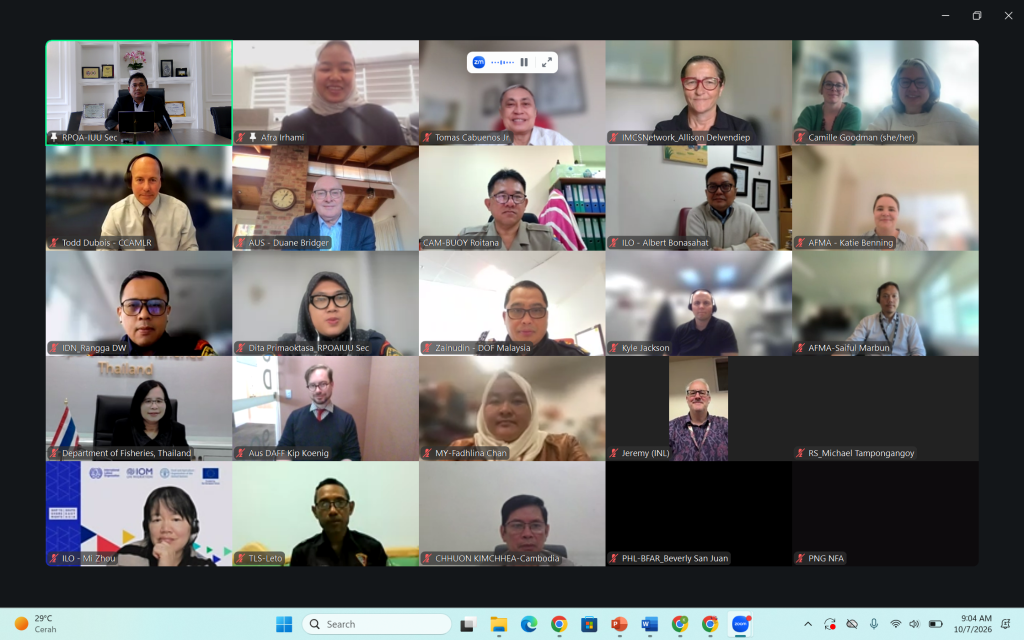
The CTI-CFF Workshop on Illegal, Unregulated and Unreported (IUU) Fishing Risk Index and Score in the Coral Triangle Region was held virtually on 5–6 May 2026. The workshop aimed to discuss regional approaches in assessing IUU fishing risks and strengthening cooperation to address fisheries-related challenges in the Coral Triangle region.
The RPOA-IUU Secretariat participated in the workshop as one of the invited speakers and delivered a presentation entitled “Regional Context and Priorities – Cooperation in Combating IUU Fishing within the RPOA-IUU Framework.” The presentation highlighted the role of the Regional Plan of Action to Promote Responsible Fishing Practices including Combating IUU Fishing (RPOA-IUU) as a voluntary regional initiative that facilitates cooperation among participating countries in addressing IUU fishing through coordinated Monitoring, Control, and Surveillance (MCS) measures.
During the presentation, the Secretariat provided a current trends and issues relating to IUU fishing and crimes in the fisheries sector, including unreported landings, unauthorized transshipment, vessels operating without nationality, illegal recruitment of foreign crews, and smuggling activities associated with fisheries operations. In response to these challenges, the Secretariat shared various regional and national efforts undertaken by participating countries, such as developing IUU risk fishing index to help assist the region in tracking the progress in combating IUU fishing and developing national fisheries intelligence platforms.
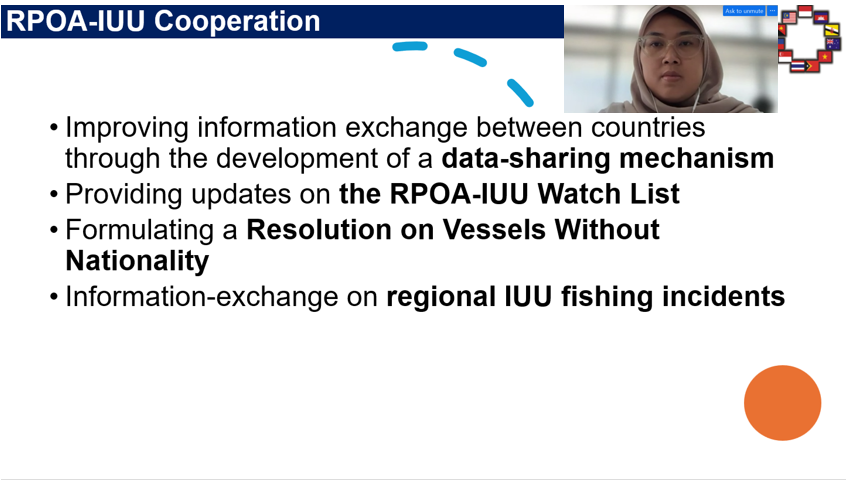
Furthermore, the Secretariat introduced several ongoing regional initiatives under the RPOA-IUU framework, including the development of the RPOA-IUU Data-sharing Mechanism and the maintenance of the RPOA-IUU Watch List. These initiatives aim to improve fisheries intelligence, facilitate timely information exchange, and strengthen regional coordination in responding to IUU fishing activities.
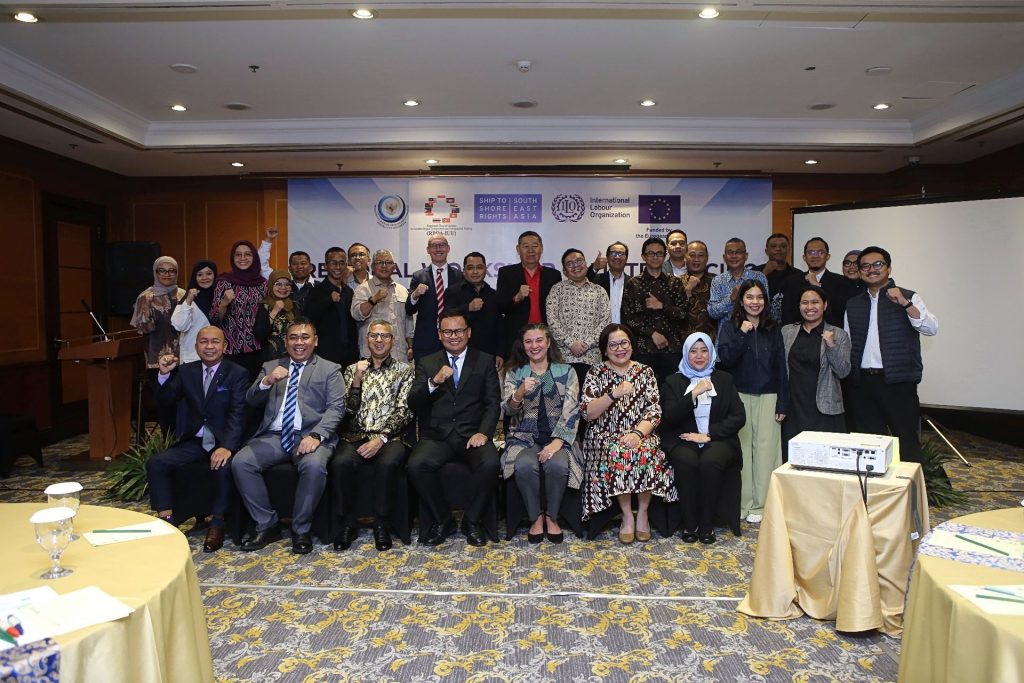
The Secretariat also shared the outcomes of the recent Regional Workshop on Crimes in the Fisheries Sector held in Bali in April 2026, which emphasized the importance of inter-agency cooperation, regional data-sharing, and collaborative enforcement actions in addressing crimes linked to the fisheries sector.
Overall, the workshop served as an important platform for exchanging perspectives and strengthening regional collaboration in developing risk-based approaches to combating IUU fishing. The discussions reaffirmed the importance of enhanced information-sharing, fisheries intelligence cooperation, and coordinated regional efforts in supporting sustainable fisheries management and safeguarding marine resources in the Coral Triangle region.